
Neuroscience Portfolio
This portfolio contains a collection of my work in the Neuroscience Program at Washington and Lee University. It displays my growth as a student throughout four years, from my introductory courses to my capstone research. Feel free to browse through the five departmental learning objectives.
Learning Objective One
Articulate and demonstrate competency in understanding the basic function of neuronal signaling and attain field/discipline specific knowledge.
Ecstasy Presentation
This presentation was created for Introduction to Neuroscience Workshop (NEUR 121) in the winter term of my sophomore year. Our goal was to create a multi-level presentation on the impacts of ecstasy in the brain targeted at scholars with an intermediate level of knowledge in neuroscience. This best exemplifies my knowledge of learning objective one, as my partner and I explain both the inner workings of serotonergic neural signaling and the impact of an exogenous substance on the signaling. By researching and understanding the impacts of ecstasy at serotonin neurons, we were better able to understand the vesicle loading, fusion, exocytosis, and uptake of serotonin in the typical synapse. My partner and I both contributed to the background research and presentation. I developed the animations to demonstrate the functioning of the synapse. This presentation demonstrates the importance of visual representations for understanding neural signaling. Visuals in textbooks were always one of the most helpful tools for me to learn about neurotransmission. By making this animation and presentation, I was able to further cement my understanding of neurotransmission. See the presentation here. See the powerpoint slides here.
Viagra Infographic
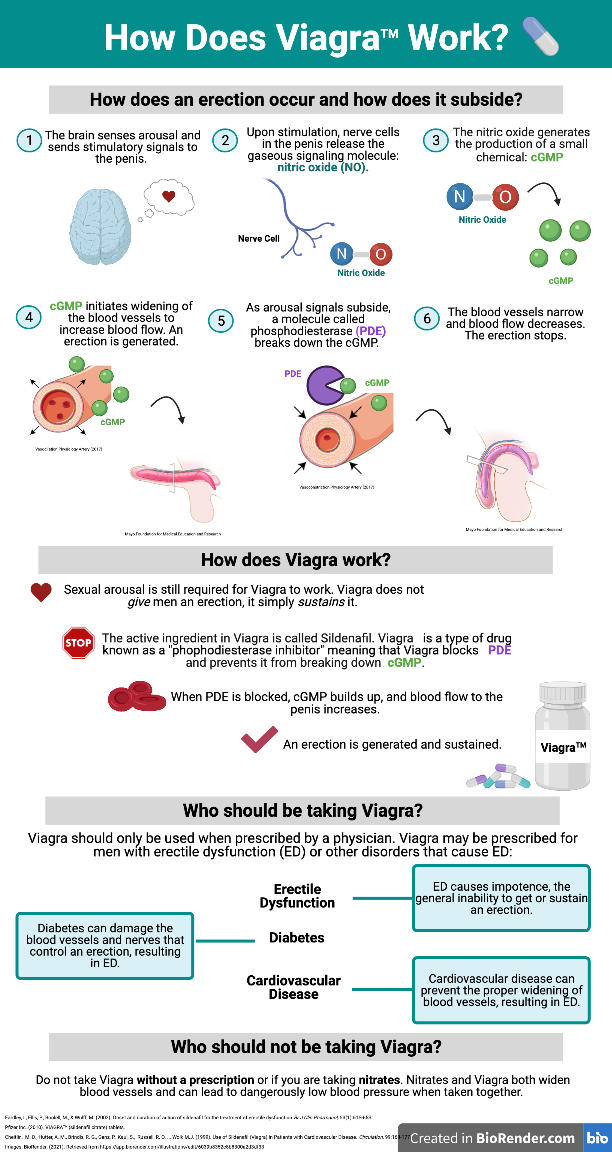
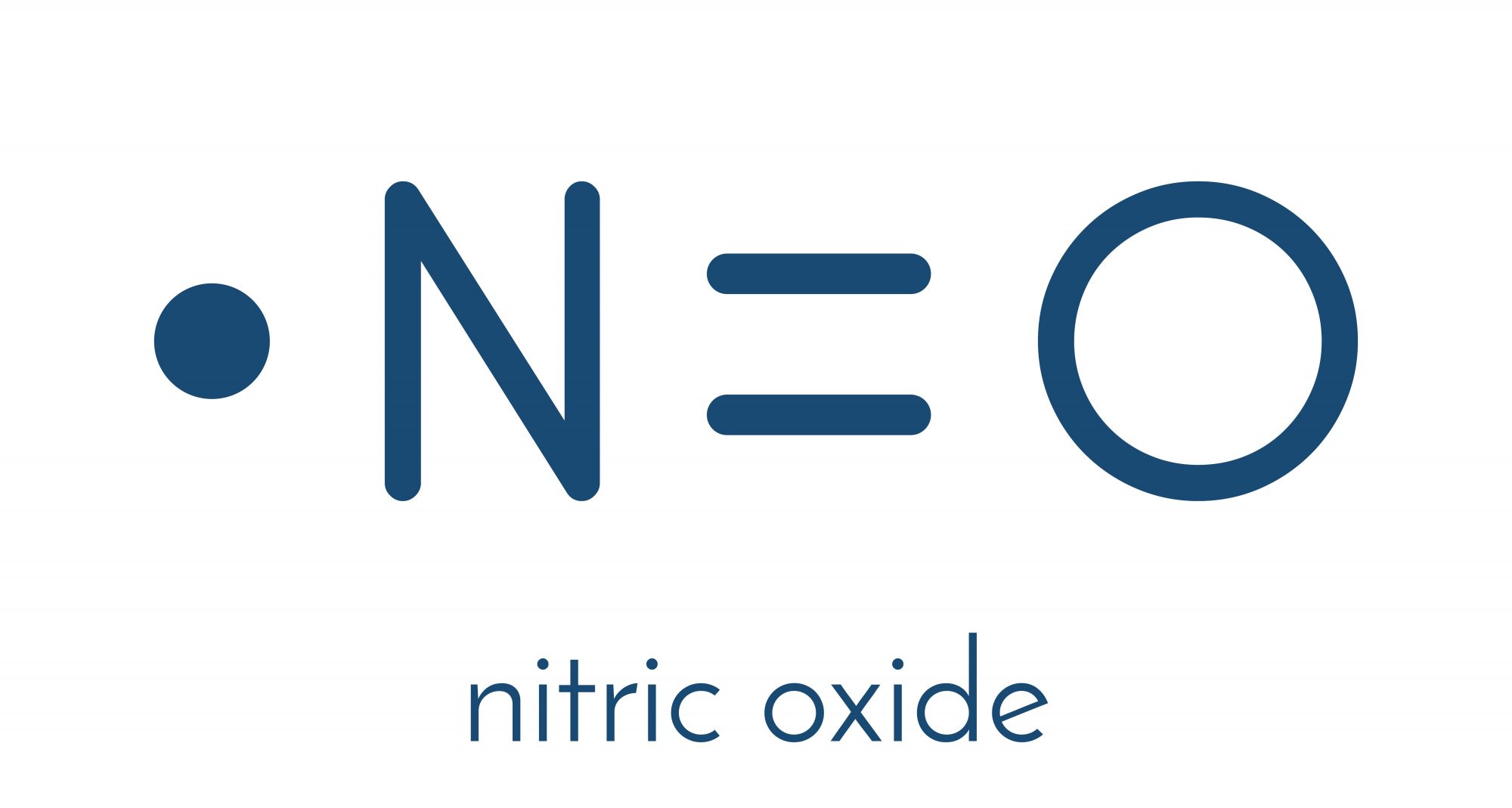
The infographic was created for Neuropharmacology (CBSC 256) during the winter term of my senior year. It was created as an informational visual guide for individuals with little educational background in the sciences. This infographic best exemplifies learning objective one, as it demonstrates field specific knowledge on the role of a gaseous neurotransmitter, nitric oxide. The role of nitric oxide is not commonly discussed in introductory neuroscience courses, yet its role and connection to g-protein coupled cascades is critical in the nervous system. This infographic was created in collaboration with another neuroscience student. Both my partner and I equally contributed to the background research and creation of the visual product. I included this infographic in my portfolio because it demonstrates my ability to explain a complex, sensitive topic to a non-scientific audience. Limiting the use of jargon while integrating understandable images was difficult at first, but through rounds of editing my partner and I were able to develop a clear infographic targeted at the proper audience. You can see the full infographic here.
Multiple Sclerosis and Sleep Research Proposal
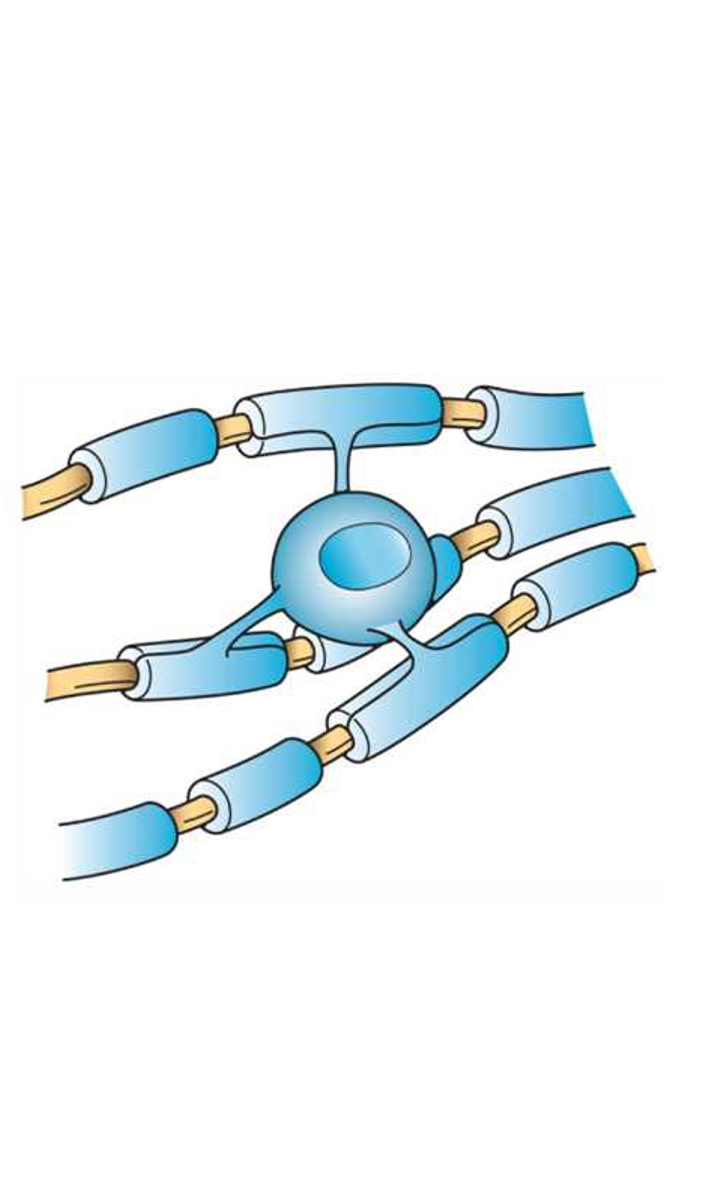
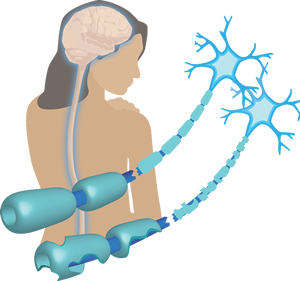
This research proposal was created for Sleep and Circadian Rhythms (CBSC 257) during the winter of my junior year. For the assignment, I was required to create an official NIH grant proposal addressing an important, unanswered question in sleep and circadian science. Within the proposal, I provide a hypothesis, methods, analysis, and predicted results. The audience is a grant reviewer at the NIH. This proposal best demonstrates the first learning objective because it requires understanding of (1) multiple sclerosis, a neurodegenerative disease of the central nervous system, and its impact on neurotransmission and (2) sleep, and how it can improve the negative effects of multiple sclerosis on neurotransmission. This proposal was created independently and illustrates my curiosity as a student and neuroscientist. I have studied multiple sclerosis throughout my education at Washington and Lee, but through this project, I was able to dive into the literature on multiple sclerosis as it related to one specific topic, sleep. I found holes in the literature that required more research and developed the grant to study these unanswered questions. In the future, I hope to contribute to scientific research in this way, and I believe that this research proposal is an excellent example of the type of investigative research I hope to pursue in the future. You can see the research proposal here.

Learning Objective Two
Engage in scientific analysis and interpretation.

Feeding Behavior in High-Fat, High-Sugar Rats
This report was developed for Introduction to Data Science In Python (BIOL 187). I took this course during winter of my junior year. The goal of the assignment was to analyze a dataset, establish a relationship, and interpret the findings relative to previous research. We investigated a dataset on the feeding and drinking behaviors of rats given high-fat, high-sugar and control diets. The code we generated in Jupyter Notebooks was meant to be easily usable for individuals with no coding experience, so that they could upload different datasets with the same format and receive an output. This report and the associated code fits perfectly with learning objective two, as it required intensive analysis skills within Python. Beyond that data analysis, the paper development additionally required interpretation of the data relative to the current body of research. This report was a collaborative effort with four other classmates. My main focus, alongside two of my partners, was to create all of the code for the data analysis. Everyone in the group contributed to background research, however. Through this project, I learned how to organize and assess large amounts of data. While handling large quantities of data, it’s critical to make clear headings and include notes alongside the code. These organization elements prevent confusion and provide clarification when returning to the project after a few hours or days. You can see the report here.
Sleep Self-Study
This self-study was conducted in Sleep and Circadian Rhythms (CBSC 257) during the winter of my junior year. For the assignment, I collected data on my sleep and wake patterns with actigraphy and analyzed it in accordance with six different measures of sleep health: timing, efficiency, satisfaction, alertness, regularity, and duration. The paper was targeted at individuals with a basic background in sleep science. This self-study best fits learning objective two, as it required analysis of actigraphy data and comparison of my personal data to the class data. Moreover, I developed my own hypothesis and completed an additional analysis to determine how my physical activity schedule as a varsity athlete impacts my quality of sleep. I completed this project individually. By conducting this self-study, I learned about the critical importance of regularity in sleep. My weekend nighttime schedule, along with many of my classmates, drastically differed from that of my weeknight schedule. This irregularity shifts the sleep mid-point and interferes with the quality of sleep. You can see the self-study here.
Ribosome Processivity
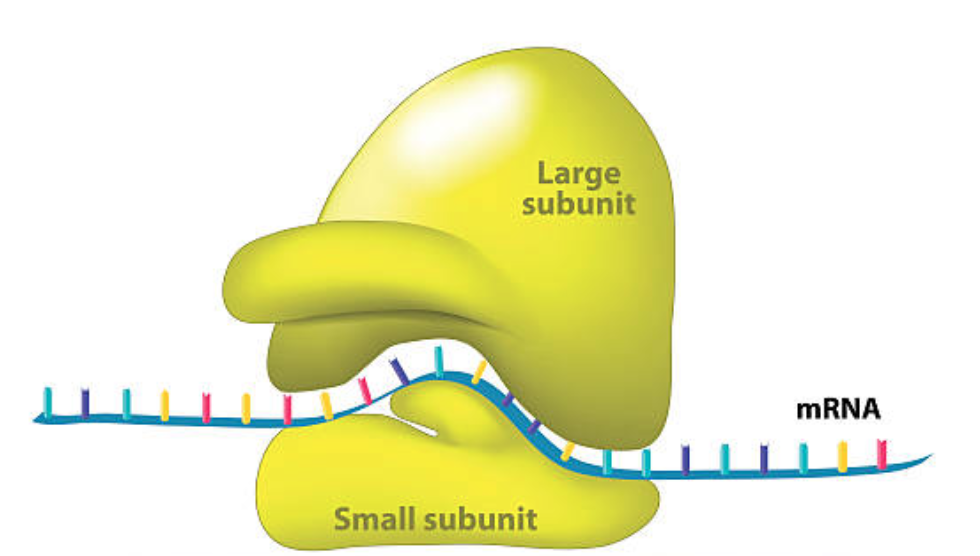
This lab report was written for capstone research in Stress and the Ribosome (NEUR 422) during the summer after my sophomore year. Using a construct with four fluorescent proteins, our lab analyzed translation in NIH 3T3 and yeast cells for multiple mutant strains. Our goal was to determine the proteins and initiation factors involved in the early termination of translation and the production of truncated proteins. In the lab report, I provide details on our methodology, but a majority of the lab techniques included confocal microscopy, Western blotting, and qPCR. This lab report best fits learning objective two, as it required analysis of hundreds of data points on yeast and analysis of confocal microscopy imaging. Processing this type of imaging data was novel for me at the beginning of the summer, but I have continued to build my skills over the past two years while working in the lab. This lab report demonstrates my dedication to a research lab at Washington and Lee. Although this report focuses on the research conducted during the summer after my sophomore year, it is representative of the research I continued to conduct in the lab for the next two years. You can see the report of my summer research here.
Learning Objective Three
Identify relevant primary research and critically evaluate it.
Dietary Influences on Multiple Sclerosis
This review paper was written for Nutritional Neuroscience (CBSC 298A) during fall of my junior year. My goal was to develop a review of the current primary literature on dietary influences in the progression of multiple sclerosis, with specific emphasis on relapsing-remitting multiple sclerosis. In addition to summarizing and organizing primary literature, I also developed two of my own figures. The paper is intended for individuals with a science background who have an interest in learning more about the effectiveness of dietary changes in delaying the progression of multiple sclerosis. The review paper is an excellent fit for learning objective three, and required me to delve into multiple databases and uncover as much primary literature on the topic as possible. Critical evaluation of methodology and results helped me determine which papers should be included in the review and where within the review they should be placed. This review paper was created as an individual assignment, with minimal proofreading and general editing from fellow neuroscience peers. The paper has a significant place in my development as a researcher and neuroscientist. After mentioning the paper in the locker room to my teammates one afternoon, one of my teammates approached me. Her father currently struggles with multiple sclerosis and she was hoping that I could email him the paper so that he could take a look at the research I uncovered. It was incredible to think that I my research had the potential to help someone. In the future, I hope to contribute to this type of research on an even larger scale. To see the review click here.
Gustation and Anorexia Nervosa
This review was generated for Sensation and Perception (CBSC 252) during the fall term of my senior year. In an effort to understand the altered gustation in anorexia nervosa and expand our general knowledge on gustatory processing, I developed an in-depth review on taste sensitivity, hedonic processing, reward processing, and mouthfeel in the development and progression of the disease. The paper is directed at researchers who study the chemical senses. The review fits well with the third learning objective because it required extensive review of the primary literature and critical analysis of studies with contrasting results. Research papers on the topic spanned from the 1980s to the present, making comparisons between methodologies challenging. I created this paper as an independent project, although I asked neuroscience peers to proofread and edit my drafts. Through this project, I learned about the importance of basic scientific research. The alterations in anorexia are connected to many sensory alterations. Without basic research on olfaction and gustation, we would not be able to help individuals with anorexia develop a more positive experience with food. View the review here.
Learning Objective Four
Collaboratively engage in the scientific process by conducting ethical research with faculty and peers.

Proprioception and Interoception in Athletes
This study was conducted for Advanced Methods: Psychophysiology (CBSC 398A) during the fall of my junior year. The goal was to investigate the relationship between proprioception and interoception in athletes and non-athletes. Physical activity has been separately connected to both interoception and proprioception in previous research, but our research wanted to determine if the relationship between the variables is altered based on physical activity levels. The paper is directed at a scientific audience, and has been developed into an official manuscript and submitted to BIOS, a quarterly journal of biology and the journal of Beta Beta Beta biological honors society. I completed the entire project, from background research to data collection to data analysis, making this paper an excellent example for learning objective four. The development of the paper was completed independently, although my peers in the advanced methods course also helped test participants and collect data. This research is representative of my future interests. Since completing this project, I started working with a sports medicine organization to study injuries from athletics. I enjoyed looking at the differences between athlete and non-athlete populations, and I hope to continue working with athletes in the future. You can view the final paper here.
Social Status and the Speaking Tradition
This review was generated for Research Methods and Design (CBSC 120) during the fall term of my sophomore year. The study looks at the relationship between adherence to the Speaking Tradition at Washington and Lee and social status of the recipient. Our main focus was on whether or not students were more likely to engage in the tradition when walking by a faculty member or when walking by another student. We observed fifty total observations, twenty-five student-student interactions and twenty-five student-adult interactions. Our study was directed at university promotions, to help them know if our promotion of the speaking tradition to prospective students is an accurate representation of what actually happens on campus. The study fits best with the fourth learning objective because it required observational research and resultant data analysis and interpretation. I worked in a team with two other psychology and neuroscience students at Washington and Lee. We all collected data and worked on the development of the paper together. While developing our research question, I learned about the importance of operational definitions for variables. All variables must be specific and measurable so that other researchers can replicate the methodology. At times, operational definitions can be challenging to develop, so it’s always a good idea to get multiple perspectives on the best way to define each variable. To view the final paper, click here.
Flow Rate and Macro-Invertebrate Populations
This study was conducted for Introductory Biology Lab (BIOL 113) during the fall term of my freshman year. Our investigation sought to uncover the impact of flow rate on macro-invertebrate community composition and water quality. The macro-invertebrate community diversity is an important indicator of the health of the surrounding ecosystem, and the impacts of flow rate could have important implications for stream bio-assessment. I targeted the paper towards ecologists and other individuals with a science background who are interested in macro-invertebrate diversity and stream ecosystem health. Our investigation is particularly important for individuals near the Maury River and watershed of the Chesapeake Bay. It fits best with the fourth learning objective, as it required data collection in the local stream and then analysis of the data in accordance with health metrics for watersheds. The paper was created independently, although data collection in the stream was done with another biology student at Washington and Lee, as it required two individuals to measure the flow rate. This paper is a great indicator of my writing and critical analysis skills as I entered Washington and Lee. I included it in my portfolio because when compared to other more recent pieces, it demonstrates my growth as an undergraduate neuroscience student. The paper can be viewed here.
Learning Objective Five
Effectively communicate scientific information (orally, visually, and in writing).
Multiple Sclerosis Presentation
This presentation was completed for my Introduction to Neuroscience Workshop (NEUR 121) during the winter of my sophomore year. The goal was to generate a brief, engaging 7-minute presentation on the frequency, progression, and treatments of multiple sclerosis. After presenting my topic, I answered a series of questions from my classmates. My classmates, with an intermediate level of knowledge on neuroscience but no specific experience with multiple sclerosis, were the target audience for my presentation. This presentation best fits with learning objective five and demonstrates my ability to develop an informative and interesting oral presentation. Through this presentation, I learned how to create a hook to grab the audience’s attention and to use progressive disclosure to gradually introduce more complex concepts. This item helps build to my portfolio and demonstrates my growth in presenting and researching multiple sclerosis, a topic that I have investigated in multiple classes throughout my time at Washington and Lee. You can view the presentation here and the powerpoint slides here.
Multiple Sclerosis Brochure and Handout
The brochure and handout were generated for Nutritional Neuroscience (CBSC 298A) during the fall of my junior year. My goal was to create informational handouts for patients with multiple sclerosis and their family members. The brochure encourages dietary changes and promotes a healthy lifestyle and mindset for multiple sclerosis patients, while the handout provides more scientific background regarding the recommendations made in the brochure. The language used in the brochure is simple and encouraging and is targeted for multiple sclerosis patients who may feel discouraged with their prognosis. Although the progression of multiple sclerosis is debilitating, this brochure demonstrates the importance of providing patients with a sense of agency and control in their lives. This assignment fits excellently with learning objective five. It required a new communication style with which I didn’t have much previous experience. Through the semester, I had culminated a massive amount of research and knowledge on multiple sclerosis and dietary interventions. Making this information accessible to the patients was a challenge, however, and required changing a majority of my scientific jargon. Both the brochure and handout were made as independent projects. Through this project, I learned about the importance of create understandable, informational documents for a non-scientific audience. Patients with multiple sclerosis and other debilitating neurodegenerative diseases want to be well-informed about the progression, symptoms, and treatments for their disease. Scientific abstracts and manuscripts can, more often than not, create more confusion for the patients, however. It’s critical that there are documents targeted to the patients. With more knowledge, the patients will feel more confident in their physicians and the course of treatment they are receiving. To view the brochure, click here, and to view the accompanying handout, click here.
Community-Based Learning Project
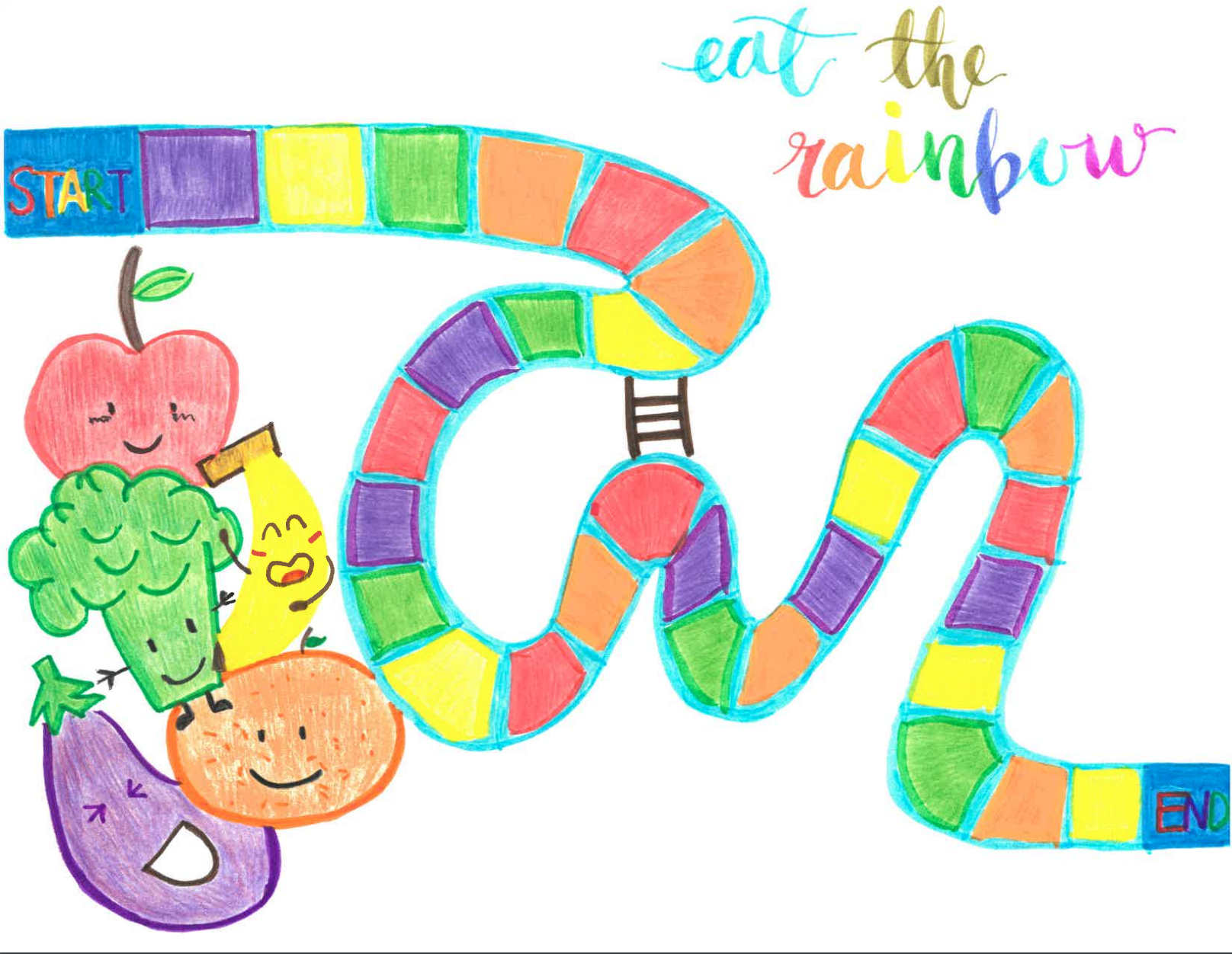
This project was completed for Food for Thought (BIOL 275) during the fall term of my senior year. Through this project, we wanted to develop interactive videos and games for elementary school-aged students to learn about healthy eating habits. My group focused on fruits and vegetables in our project. We developed video and handout for a black bean salad recipe. Additionally, we developed a board game and video instructions for the board game. This project best fits with learning objective five, as it required both visual and oral presentation of scientific information to a unique audience, elementary school-aged children. I worked with a group of three other neuroscience and biology students to develop the handouts, videos, and board game. We met weekly to discuss our plans, and one of my main roles was to develop the handouts and the scripts for the videos. I chose to add this item to my portfolio because it is unique compared to my other neuroscience projects. No other class during my neuroscience degree required a presentation targeted to such a distinct audience. All of my group members, including myself, did not have any previous experience developing child-friendly scientific videos or handouts. The final product required multiple rounds of editing and input from all group members. Overall, the experience was positive, and I’m proud to know that our materials may be used by the Virginia Cooperative Extension in the future. I’ve included the board game portion of our project in this portfolio. Please click here to view our video. You can also view our instructional handout for the board game here and the board game layout here.

Reflection
My time in the Neuroscience program has been rewarding, and I’m excited to be moving on to the next stage in my education.
Which item is my most satisfying work?
Throughout my time in the Neuroscience Program at Washington and Lee, I have grown as a researcher, critical thinker, and presenter. I am proud of many of the pieces of work I have created, including those not shown in here in my portfolio. My most satisfying work is my capstone project investigation of the relationship between proprioception and interoception in athletes and non-athletes. This project was my first opportunity to conduct an entire study from the research question development to the statistical analyses. I was able to investigate a topic that I found interesting and implement the entire study from beginning to end. I enjoyed implementing new methodologies, such as a hooking up and reading an electrocardiogram. The results, although statistically insignificant, were intriguing. They suggest that there may be a different directional relationship between proprioception and interoception in the athlete and non-athlete populations. After completion of the project for the course, I worked in tandem with Dr. Brindle to produce a submission for a biological journal made by Beta Beta Beta, the biology national honors society to which I was inducted in sophomore year. This project has been long-term, and it is satisfying to see all of the pieces fitting together into a neat, organized manuscript that I can submit to a scientific journal.
Which item is my best work?
As I matured through my time at Washington and Lee, I started to produce higher and higher quality work. The best quality piece of work I created was during my senior year, my review of anorexia nervosa and gustation. In this paper, I created an excellent organizational structure with clear headings and divisions. Although it would have been simple to go off onto tangents about the pathology and treatment of anorexia nervosa, I stayed on topic and focused on the relationship between gustation and the eating disorder. In order to assess higher level taste functioning in the hedonic and reward circuits, I had to review myriads of papers with functional MRI imaging. Imaging papers can be difficult to interpret without previous experience with the techniques. Nonetheless, I took the time to comb through the details of each paper and compare the brain regions that were most impacted in anorexia nervosa. The insula, for example, was one area of interest in my hedonic assessment of taste. There was differential activation of this region in a variety of different studies, making it difficult to come to an immediate, solid conclusion. With enough time and the proper organizational comparison of studies, however, I was able to make straightforward comments on the findings. I’m proud of the product that I produced, and now I feel confident in my ability to analyze large quantities of research and form clear conclusions.
Looking at items from early versus late in my career, how have I developed as a researcher and neuroscience student?
When comparing my earlier works from freshman and sophomore year to my more recent works from senior year, I see a major improvement in my vocabulary and articulation. The wording in my paper from introductory biology lab, for example, has less clarity than the later works. At times, I include unnecessary details that make the major goal of the paper unclear. Without the skills to review and comb through large amounts of primary literature, I was not as successful in making connections to previous research and suggesting future areas of study. As I continued through the program, however, I was regularly exposed to primary literature. I learned to read, present on, and discuss primary with my classmates on a regular basis. Therefore, my later papers have more informed vocabulary choices and make better suggestions for future research. As I continue to build more and more background knowledge and experience after graduation, I anticipate that my papers will continue to improve in their quality and clarity.
Most importantly, you can see my interest in neuroscience and biology blossom as you move from my earlier works to my later works. The tone of voice and details integrated into the assignments show my interest in the topic. In my junior and senior years, I felt less bogged down by the large assignments and more driven to complete them, as I had a genuine interest in the topics I was investigating. This growth in interest confirms that I chose the correct major for my undergraduate education. Now, I cannot wait to continue my neuroscience education after graduation.
Throughout my experiences in the Neuroscience Program, what did I learn that could not be placed into this portfolio?
There’s many lessons that from my time in the Neuroscience department that cannot be accurately depicted in this portfolio. Primarily, I’ve learned that writing requires a clear voice and purpose. Before starting at Washington and Lee, I always felt pressure to mirror other people’s writing styles, and I lacked confidence in my ability to produce a piece of work that truly had my voice. While working with peers and reading primary literature in the Neuroscience program, however, I’ve learned that every writer has a different voice and a different viewpoint. There are similarities in the structure and design of certain papers (i.e., grant proposal, manuscript, etc.). Nonetheless, I’ve learned that it’s important to express your own desires and goals truthfully and openly. When I read sentences from my more recent papers, I can hear my own voice inside my head speaking the words out loud. I’ve had peers and proofreaders express that when they read my papers, they can tell that I’ve written them. I’ve finally started to develop a distinct voice and viewpoint.
During my time in the Neuroscience Program, I’ve also learned about the importance of collaboration and interpersonal communication skills. Group projects and assignments can seem frustrating at first, as everyone in the group has different ideas and voices that they want to project through the assignment. Nevertheless, input from multiple group members can be critical for addressing potential weaknesses and for adding new perspectives. Early in my undergraduate career, I used to seize control over a group project, having limited trust in my classmates’ abilities to execute their parts correctly. Now, however, I have much more trust in my classmates. I understand that a blending of voices and perspectives is critical for the creation of a strong final product. I no longer fear group projects, but rather, look forward to collaborating with my peers and hearing new perspectives and ideas.